
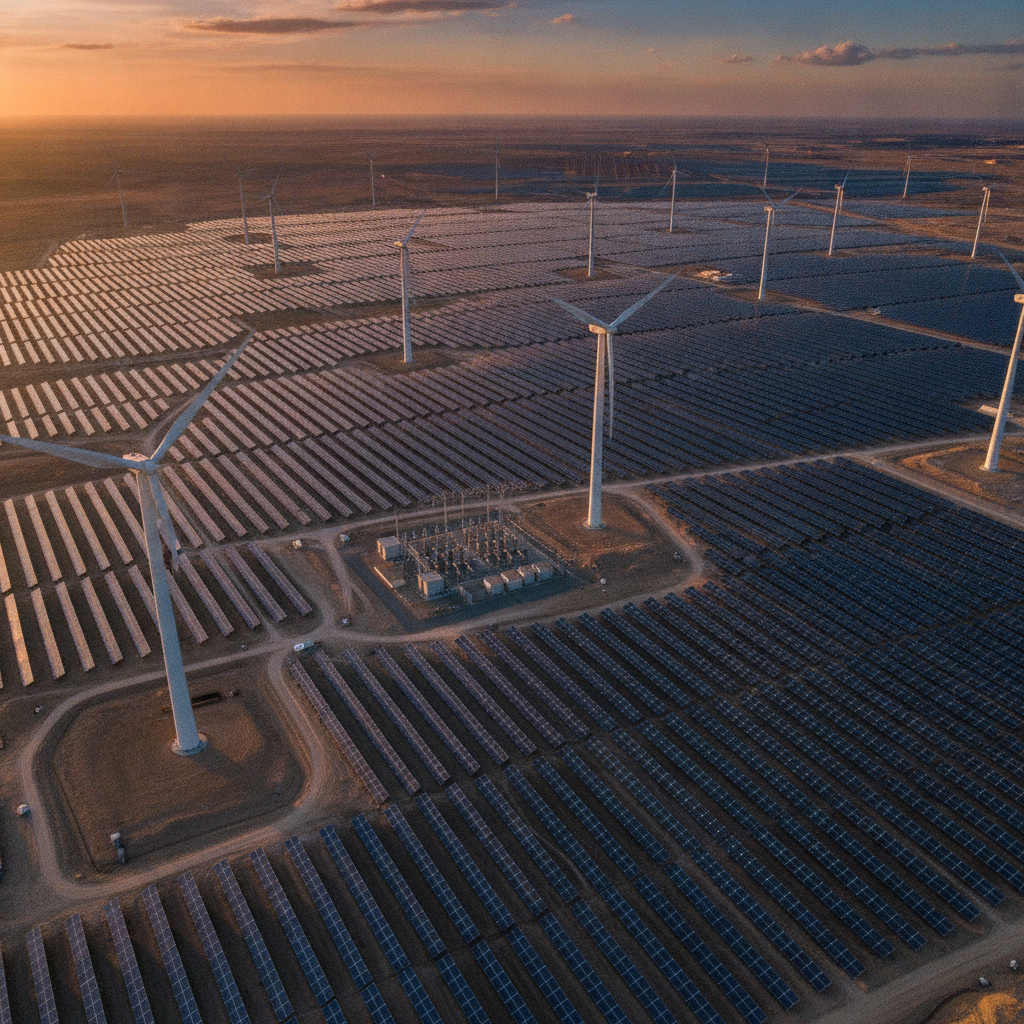
Navigating the complex landscape of financing large-scale renewable energy infrastructure projects is critical for accelerating the global energy transition. At Energende, we understand the intricate financial mechanisms required to bring ambitious solar farms, wind parks, and hydroelectric plants to fruition, ensuring robust and sustainable development. The demand for clean energy is surging, driven by technological advancements and urgent climate goals, creating unprecedented opportunities for developers and investors alike in the renewable energy infrastructure sector.
The Evolving Landscape of Renewable Energy Infrastructure Financing
The financial ecosystem for large-scale renewable energy infrastructure is dynamic, shaped by global economic shifts and evolving policy frameworks. Understanding these currents is vital for securing capital and de-risking investments in multi-million and multi-billion dollar projects. The sheer scale of utility-grade solar and wind developments, often spanning hundreds of megawatts, necessitates sophisticated financial engineering to ensure bankability.
Current Market Dynamics and Investor Sentiment
US energy consumption is experiencing a significant uptick, propelled by factors such as the rapid expansion of artificial intelligence (AI) data centers and a resurgence in domestic manufacturing. This extraordinary surge, projected to increase electricity demand by 35–50% by 2040, intensifies both the opportunity and pressure on clean energy developers. However, the market in 2026 is also characterized by fluctuating interest rates, tighter credit standards, and capital fragmentation, demanding a resilient and strategic approach to financing renewable energy project finance. Energende helps navigate these complexities to ensure projects remain attractive to a diverse pool of investors.
Impact of Policy and Regulatory Changes
Policy updates continue to significantly influence project viability. Key changes, such as the eligibility requirements for Investment Tax Credits (ITCs) and Production Tax Credits (PTCs) under the Inflation Reduction Act (IRA), directly affect financial structuring. For instance, Treasury Notice 2025-42 mandates that solar projects larger than 1.5 MW and all wind projects must begin physical work by July 4, 2026, to qualify for full tax credits. Additionally, new domestic content and “Foreign Entity of Concern” requirements are tightening eligibility criteria, demanding rigorous due diligence for all new renewable energy infrastructure initiatives.
- Rising US energy consumption driven by AI data centers and manufacturing underscores the urgent need for new generating capacity.
- Fluctuating interest rates, tighter credit standards, and capital fragmentation will continue to shape the financial landscape into 2026.
- Updates to IRA tax credit eligibility, including physical work deadlines (e.g., Treasury Notice 2025-42), make early planning crucial.
- New domestic content and “Foreign Entity of Concern” requirements are affecting project eligibility and supply chain considerations.
Core Financing Strategies for Large-Scale Renewable Energy Projects
Bringing large-scale renewable energy projects to fruition requires a meticulously crafted financial architecture. Project developers must consider a range of financing instruments to assemble a robust capital stack that can withstand market volatility and meet the long-term demands of these significant assets. From multi-gigawatt solar farms to extensive onshore and offshore wind parks, the financing needs are substantial and require specialized expertise.
Diversified Debt Financing Approaches
Project finance models are specifically tailored for the long-term nature of infrastructure assets, typically involving non-recourse or limited-recourse debt. This approach isolates the project’s assets and cash flows, making it attractive to lenders seeking predictable returns. Senior debt forms the backbone of most large-scale projects, often provided by commercial banks or institutional lenders. For additional leverage, subordinated debt or mezzanine financing can be introduced, sitting below senior debt in priority. Furthermore, construction bridge debt is frequently used to provide capital for initial construction costs, bridging the gap until permanent financing or tax equity can be secured. This is particularly relevant for projects needing to meet accelerated timelines for tax credit qualification.
Strategic Equity Investment Structures
Equity plays a foundational role in the capital stack, demonstrating developer commitment and absorbing initial project risks. Key equity components include sponsor equity, which is direct investment from the project developer, and preferred equity, which offers a fixed return and holds a senior position to common equity but is subordinate to debt. Tax equity, especially prevalent in the U.S., involves investors who can monetize federal tax credits and depreciation benefits. The strategic integration of these equity types is critical for reaching financial close. Early planning and comprehensive documentation are paramount for presenting a clear and compelling case to potential equity investors, ensuring all legal and financial aspects are rigorously defined.
- Project finance models are specifically tailored for long-term infrastructure assets, focusing on predictable cash flows.
- Senior debt, subordinated debt, and construction bridge debt options provide flexible capital for various project stages.
- Roles of tax equity, preferred equity, and sponsor equity in the capital stack are crucial for risk sharing and financial viability.
- Importance of early planning and documentation for securing financing, especially for complex structures.
Optimizing Capital Stacks for Renewable Energy Infrastructure
The efficiency and attractiveness of a renewable energy infrastructure project heavily depend on its optimized capital stack. This involves not only securing sufficient funds but also structuring them to maximize returns, minimize costs, and appropriately allocate risks. Energende assists developers in this crucial phase, leveraging our deep understanding of market mechanisms and investor expectations for large-scale assets.
Leveraging Tax Credits and Bridge Loans
Transferable tax credits, such as Investment Tax Credits (ITCs) and Production Tax Credits (PTCs), are powerful incentives that significantly enhance project economics. ITCs typically provide a percentage of the project’s eligible cost as a credit, while PTCs offer a per-kilowatt-hour credit for electricity generated over a period. The advent of direct transferability has created a robust market for these credits, allowing developers to monetize them more directly. Tax equity bridge loans and tax credit transfer bridge loans provide essential interim financing, allowing projects to proceed with construction while the tax credit monetization process is finalized. These mechanisms are vital for maintaining project momentum and ensuring timely completion of Energy Infrastructure Investment Opportunities Across Emerging Markets.
Attracting Institutional Investors and DFIs
Attracting long-term capital for large-scale renewable energy infrastructure projects often means engaging institutional investors like pension funds, insurance companies, and sovereign wealth funds, alongside Development Finance Institutions (DFIs). These entities seek stable, long-term returns from de-risked assets. Bankable renewable energy investments, particularly in emerging markets, depend on disciplined capital stack structuring, clear risk allocation, and alignment with institutional investor requirements. Meeting these stringent criteria is essential for securing the substantial investments required for multi-GW projects. For example, Delphos highlights that only projects with robust financial structures and credible revenue models secure long-term investment and reach financial close in these regions according to their research.
- Understanding transferable tax credits (ITCs, PTCs) and their evolving market value is key to optimizing project financing.
- Utilizing tax equity bridge loans and tax credit transfer bridge loans provides critical liquidity during construction phases.
- Disciplined capital stack structuring and clear risk allocation are prerequisites for bankability and attracting top-tier investors.
- Meeting institutional investor requirements for long-term capital is crucial in both established and emerging markets.
Strategic Risk Mitigation and Future Trends in Renewable Energy Finance
As the renewable energy sector matures, effective risk mitigation strategies become increasingly critical for protecting investments and ensuring project longevity. The dynamic nature of the market, coupled with ongoing policy adjustments, demands a proactive approach to financial planning and execution. This is especially true for projects with extensive lifespans, such as hydroelectric plants or multi-decade wind farm operations.
Navigating Policy Uncertainty and Market Volatility
Lenders and sponsors are imposing heightened diligence requirements on technology risk and revenue stability for energy projects in 2026 and beyond. This increased scrutiny applies to both established and emerging technologies, from advanced solar PV to battery storage integration. Compliance with prevailing wage and apprenticeship requirements is also mandatory for projects seeking full tax credit eligibility, adding another layer of complexity. Furthermore, the drive for consolidation in the power sector is impacting financing structures, as larger entities seek economies of scale and integrated solutions. Project owners must demonstrate resilience against policy shifts and market fluctuations.
Preparing for Project Financing in 2026 and Beyond
Looking ahead, the increasing importance of grid integration and supply-chain innovation will be paramount for investor confidence. Projects that can demonstrate robust grid connectivity, alongside transparent and resilient supply chains for key components like solar panels and wind turbine blades, will be more attractive to capital providers. Latin America’s growing role in energy trade and solar imports exemplifies the impact of strengthened supply chains on economic growth and climate goals. This forward-looking approach ensures long-term viability and enhances the overall value proposition of large-scale Wind Farm Developers Optimizing Site Selection and Performance projects. The International Renewable Energy Agency (IRENA) projects significant investment increases in these areas to meet global energy demands, underscoring the shift towards integrated energy solutions.
- Heightened diligence requirements on technology risk and revenue stability are becoming standard for securing financing.
- Compliance with prevailing wage and apprenticeship requirements is essential for maximizing tax credit eligibility.
- The drive for consolidation in the power sector has implications for project financing and market structure.
- The increasing importance of grid integration and supply-chain innovation is crucial for investor confidence and project success.
For deeper insights on related topics, our article on Solar Project Financing Strategies to Maximize Returns and Reduce Risk explores complementary aspects of Energende’s renewable energy approach that project developers will find valuable.
Frequently Asked Questions About renewable energy infrastructure
Q: What defines large-scale renewable energy infrastructure projects in terms of financing?
A: Large-scale renewable energy infrastructure projects typically involve significant capital outlays for assets like utility-scale solar farms, extensive wind parks, or major hydroelectric developments. These projects often require complex financial structures, integrating various forms of debt, equity, and government incentives to achieve financial close and operational viability.
Q: How do tax credits impact the financing of renewable energy infrastructure?
A: Tax credits, such as Investment Tax Credits (ITCs) and Production Tax Credits (PTCs), are crucial incentives that significantly de-risk and enhance the financial viability of renewable energy infrastructure. They provide substantial financial benefits that can be monetized through tax equity partnerships or direct transfer, reducing the overall cost of capital and attracting investors.
Q: What challenges are unique to financing renewable energy infrastructure in emerging markets?
A: Financing renewable energy infrastructure in emerging markets often faces challenges like perceived higher political and economic risks, currency volatility, and less mature regulatory frameworks. Successful projects in these regions require robust financial structures, clear risk allocation, and alignment with institutional investor requirements, often involving Development Finance Institutions (DFIs).
Q: How does Energende support the financing of diverse renewable energy infrastructure projects?
A: Energende specializes in tailoring sophisticated financing strategies for a wide array of renewable energy infrastructure projects, including solar, wind, hydroelectric, and solar-powered data centers. We connect developers with the right capital providers and navigate complex market dynamics to ensure projects are bankable and achieve long-term success.
Partner with Energende
The evolving landscape of financing for large-scale renewable energy infrastructure demands expertise and adaptable strategies. By understanding the intricacies of debt, equity, and tax credit mechanisms, developers can successfully unlock the capital needed to realize their ambitious projects and drive global sustainability. Energende is committed to empowering the future of renewable energy infrastructure development through bespoke financial solutions. Ready to power your next large-scale renewable energy infrastructure project? Contact Energende today for an expert consultation on your financing strategy.

About the Author
Allison Parim
Allison Parim is a renewable energy analyst and content strategist at Energende, where she covers utility-scale solar, wind, hydropower, and solar-powered data center infrastructure. With a background in energy project development and a focus on making complex infrastructure topics accessible to developers, investors, and policymakers, Allison brings technical depth and strategic clarity to every article. She believes that well-informed project owners make better decisions — and that clear, accurate content is one of the most powerful tools in the energy transition.