
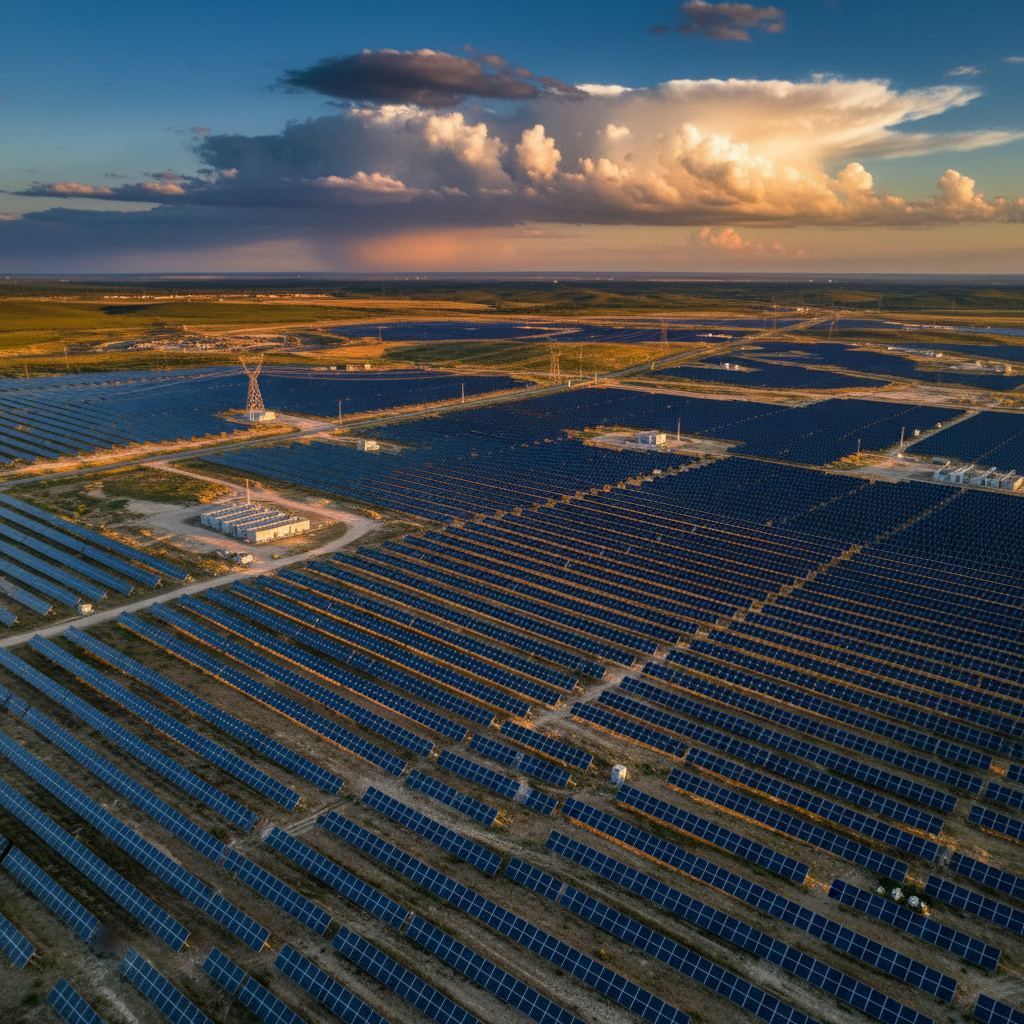
The global energy landscape is undergoing a monumental shift, with utility-scale solar energy projects leading the charge. This sector is poised for unprecedented growth, with an astounding 43.4 GW of utility-scale solar capacity planned for 2026, marking a significant 60% increase over 2025 installations. This surge is not merely about meeting escalating energy demands; it is fundamentally reshaping investment strategies, compelling capital towards infrastructure that delivers both robust financial returns and tangible Environmental, Social, and Governance (ESG) impact.
The Ascendance of Utility-Scale Solar Energy in 2026
The year 2026 is set to be a landmark period for large-scale renewable infrastructure, particularly in the realm of utility-scale solar energy. The drivers behind this rapid expansion are multifaceted, spanning from an insatiable demand for clean power to critical advancements in project development methodologies. This growth solidifies solar’s position as a dominant force in the global energy transition.
Record Capacity Growth and Market Drivers
The sheer scale of planned utility-scale solar deployment is remarkable, significantly contributing to the nation’s energy mix. Texas remains at the forefront of this expansion, accounting for an impressive 40% of all new utility-scale solar energy projects across the U.S. This concentration highlights strategic advantages, including abundant land, favorable regulatory environments, and a robust energy market.
A primary catalyst for this intensified demand is the explosive growth of hyperscale AI data centers. These facilities require immense, reliable power supplies, intensifying the urgency for rapid solar energy infrastructure deployment. The need for sustainable and scalable power solutions has never been more critical, positioning large-scale solar farms as a key enabler for future technological advancements.
According to the U.S. Energy Information Administration (EIA), the combined share of solar and wind generation is expected to surpass 20% of the total U.S. mix by early 2027, underscoring the shift away from traditional fossil fuels. This transition is not just an environmental imperative but a strategic economic move, drawing significant investment into renewable sources.
Navigating Development Challenges
Despite the immense opportunities, the utility-scale solar sector faces inherent challenges. Infrastructure constraints, labor shortages, and complex interconnection processes are significant headwinds. Successfully navigating these requires operational excellence in labor management and supply chain coordination, coupled with strategic positioning and partnerships. Developers must proactively address these challenges to unlock the full potential of this growth period.
ESG Integration and Strategic Investment Shifts
The evolving landscape of renewable energy investment is increasingly defined by ESG principles. Investors are no longer content with simply deploying the lowest-cost megawatt; they seek projects that offer long-term stability, grid resilience, and measurable environmental benefits. This shift is particularly evident in the utility-scale solar sector, where hybrid solutions are gaining prominence.
Beyond Lowest-Cost Megawatt: Solar-Plus-Storage
A critical trend in strategic investment is the migration of capital towards utility-scale hybrid projects, specifically those combining solar generation with battery energy storage systems (BESS). This “solar-plus-storage” configuration is designed to mitigate the increasing frequency of negative pricing hours in high-penetration grids and enhance overall grid stability. Investors now prioritize integrated, dispatchable systems over standalone generation assets, aligning with modern grid requirements and long-term sustainability goals.
This approach transforms solar from an intermittent power source into a dispatchable asset, providing greater value to the grid and more predictable revenue streams for investors. By integrating storage, projects can arbitrage energy prices, provide ancillary services, and improve grid reliability, making them more attractive in competitive energy markets. You can learn more about how renewable energy is powering innovation in our article on Renewable Energy Data Center Trends Shaping Sustainable Infrastructure.
Financial Pressures and LCOE Dynamics
While the long-term cost reductions in utility-scale renewables have been significant, the current environment has presented some financial pressures. According to Lazard’s June 2025 LCOE+ analysis, utility-scale solar PV has experienced a 4% increase in average unsubsidized Levelized Cost of Energy (LCOE) over the previous two years. This reflects challenges such as supply chain disruptions, rising interest rates, and increased financing pressures.
These dynamics underscore the importance of robust financial modeling and strategic project structuring to ensure profitability. Energende understands these complexities and helps clients navigate market fluctuations to secure the best possible investment outcomes for their large-scale solar projects. This comprehensive understanding ensures that projects remain viable and attractive to ESG-focused investors.
Strategic Development for Next-Gen Solar Energy Projects
The development of utility-scale solar energy projects in 2026 and beyond demands a sophisticated, integrated approach. Traditional “business as usual” methods now present significant financial risks. Successful project execution requires leveraging advanced technologies and strategic methodologies to mitigate risks and optimize performance, especially with the rising demand for solar energy.
Grid-First Strategy and Interconnection Risks
A “grid-first” strategy is paramount for 2026 utility-scale solar development. This approach involves utilizing automated injection studies and slope-aware 3D design to unify engineering and land data from the outset. By integrating data intelligence and sophisticated modeling, developers can effectively mitigate interconnection risks, which have become a major bottleneck for new projects. This proactive strategy ensures that solar energy projects are designed with grid compatibility in mind, reducing delays and enhancing project viability.
Automated electrical layouts further enhance efficiency and cost-effectiveness. These algorithms optimize electrical designs by finding the shortest possible cable routes, significantly reducing DC voltage drop and total cable length. This directly lowers Balance of System (BoS) costs and improves Bill of Materials (BOM) precision, eliminating common estimation errors that can lead to substantial financial losses on large-scale solar farms. Such precision is crucial for managing the tight margins inherent in large infrastructure projects.
Hybrid Optimization and BESS Integration
The reality of modern utility-scale projects is increasingly hybrid. Adding Battery Energy Storage Systems (BESS) is no longer an option but a core requirement for ensuring the commercial and financial viability of large-scale solar energy projects. BESS integration allows for energy shifting, capacity firming, and grid support services, making solar power more reliable and valuable.
This hybrid optimization necessitates a comprehensive approach to design and procurement, aligning engineering, construction, grid access, and long-term performance obligations from the initial stages. The shift from traditional EPC contracting to integrated, multi-asset frameworks is critical for delivering these complex projects efficiently and effectively. This ensures that the generated solar energy can be fully utilized and dispatched as needed.
Future Outlook: Demand, Capacity, and Innovation
The future for utility-scale solar energy is characterized by exponential demand growth, significant capacity additions, and continuous innovation. The industry is navigating a period of intense transformation, driven by technological advancements and evolving energy consumption patterns.
Projected Load Growth and Capacity Gaps
Forecast load growth, particularly from the booming AI infrastructure sector, significantly exceeds current grid interconnection capacity. This creates both a challenge and an immense opportunity for developers. The urgency to deploy new capacity is unprecedented, pushing the industry to rethink how projects are sited, sequenced, and financed. Strategies such as “Bring Your Own Capacity” and behind-the-meter solutions are gaining traction to address these capacity gaps effectively. For instance, the Department of Energy (DOE) consistently highlights the critical need for grid modernization to accommodate renewable integration, underlining the importance of strategic planning in this area.
By early 2027, the EIA projects total U.S. battery storage capacity to surge from 44.6 GW to over 67 GW, with Texas, California, and Arizona leading this growth. This massive expansion in storage is crucial for managing grid reliability and intermittency as solar and wind power become predominant. The ability to store and dispatch electricity when needed is key to stabilizing grids and maximizing the value of renewable generation.
Operational Excellence and Strategic Partnerships
Success in this dynamic environment demands operational excellence across all facets of project development. This includes meticulous labor management, sophisticated supply chain coordination, and strategic positioning to navigate grid bottlenecks. Given the projected demand for new solar capacity, the industry will need a substantial increase in skilled EPC crews in a very short timeframe. This necessitates proactive workforce development and strategic partnerships to secure necessary resources.
Avoiding over-concentration in a single off-taker, market, or demand assumption is also vital. Developers and EPCs must build projects that are resilient to potential capital tightening or demand pauses. Diversifying project portfolios and forging strong alliances are key to capturing disproportionate value as solar continues its historic expansion. Our expertise also extends to broader renewable strategies, as discussed in our insights on Offshore Wind Developers Navigating Regulations and Global Expansion.
For deeper insights on related topics, our article on Hydroelectric Project Financing Strategies for Long Term Investment Success explores complementary aspects of Energende’s renewable energy approach that project developers will find valuable.
Frequently Asked Questions About solar energy
Q: What are the key drivers for the growth of utility-scale solar energy in 2026?
A: The primary drivers include surging energy demand, particularly from hyperscale AI data centers, and robust policy support. Utility-scale solar capacity is projected to increase significantly, with over 43 GW planned, making it the largest contributor to new capacity additions.
Q: How do utility-scale solar projects contribute to ESG investment strategies?
A: Utility-scale solar projects are central to ESG strategies by providing clean energy, reducing carbon footprints, and supporting sustainable economic development. Investors are increasingly prioritizing solar-plus-storage configurations that enhance grid stability and reliability.
Q: What challenges face utility-scale solar energy development, and how are they being addressed?
A: Challenges include infrastructure constraints, labor shortages, and grid interconnection limitations. Developers are addressing these through grid-first strategies, automated design tools, strategic partnerships, and integrated battery energy storage systems (BESS) to ensure project viability.
Q: Where is the major growth for utility-scale solar energy concentrated in the U.S.?
A: Texas remains the leading hub for new utility-scale solar energy projects, accounting for 40% of all new installations. California and Arizona are also seeing significant growth, particularly in co-located solar and battery storage developments.
Partner with Energende
The future of energy is undeniably leaning towards renewable sources, with utility-scale solar energy at the forefront of this transformation. Energende remains committed to spearheading the development of robust, sustainable solar energy infrastructure that meets global demand and supports crucial ESG objectives for investors worldwide. Our expertise ensures that your next utility-scale solar project is not just successful, but also future-proof.
Contact Energende today to discuss how our expertise in large-scale renewable energy infrastructure can support your next utility-scale solar project.