
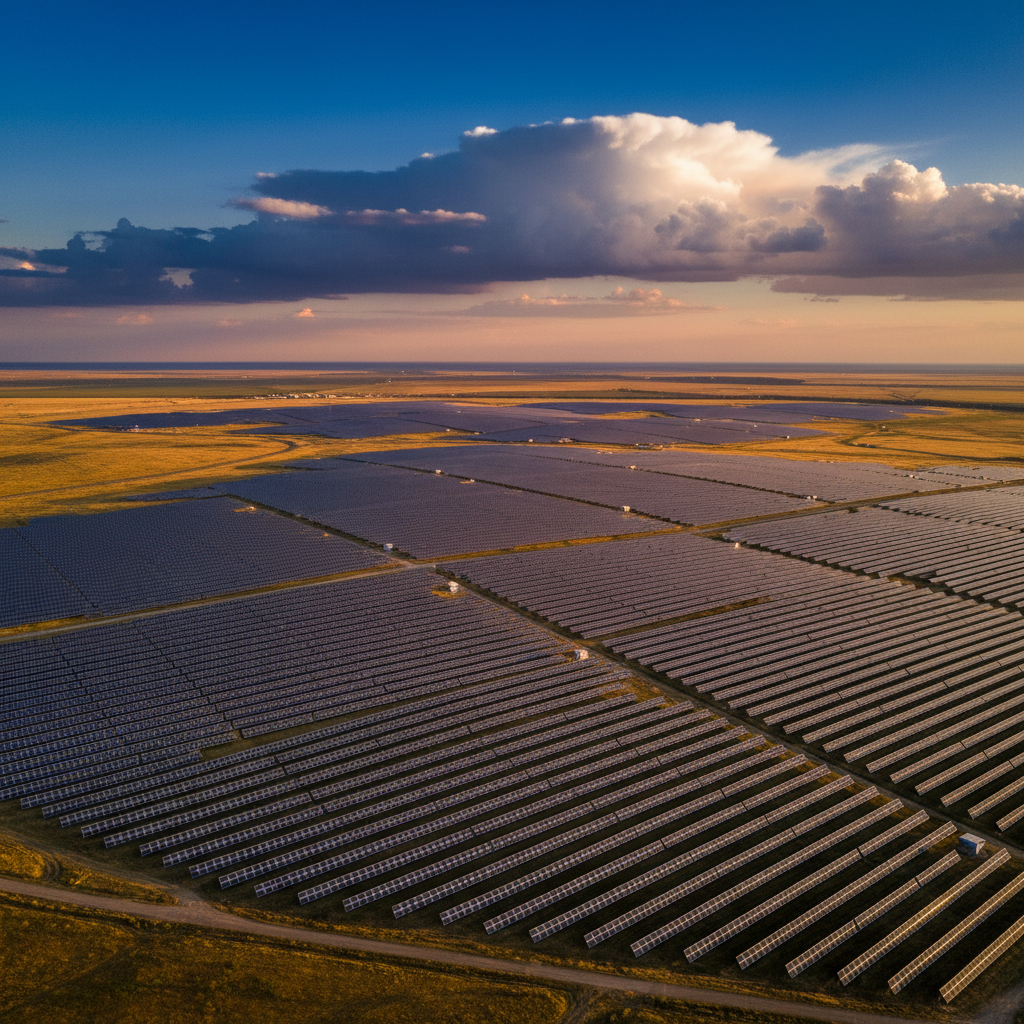
The pursuit of net zero operations is transforming the digital infrastructure landscape, with the solar data center emerging as a cornerstone of sustainable growth. As demand for data processing escalates, with data centers’ escalating energy demand necessitating a rapid shift to renewable sources to meet ambitious net-zero targets, developing data centers powered by renewable energy sources like solar becomes not just an environmental imperative but a strategic business advantage for energy developers, investors, and project owners. Energende specializes in deploying large-scale renewable energy infrastructure designed to meet the rigorous demands of modern data centers, ensuring both operational efficiency and environmental stewardship.
The Imperative of the Solar Data Center in Sustainable Infrastructure
The relentless growth of the digital economy has placed unprecedented demands on energy grids worldwide. Data centers, as the backbone of this economy, are significant consumers of electricity, making their decarbonization a critical priority. The shift towards a solar data center model is no longer optional; it is an urgent requirement driven by both environmental mandates and economic realities.
Accelerating Renewable Energy Adoption in Data Centers
The window for capitalizing on current renewable energy economics is closing, urging accelerated procurement decisions and long-term power agreements. Data center operators are compelled to secure renewable power now to avoid a significantly different market landscape in the coming years, where costs may be higher and supply more constrained. This proactive approach ensures long-term operational viability and contributes meaningfully to global sustainability goals.
Large-scale corporate Power Purchase Agreements (PPAs) for solar and other renewables significantly drive grid decarbonization and catalyze national clean energy ecosystems. Companies like Amazon and Microsoft have become leading corporate buyers of renewable energy through PPAs, demonstrating that critical loads can reliably transition to renewables. This trend underwrites new utility-scale renewable capacity, fostering a robust clean energy market.
Economic and Environmental Drivers for Net Zero
- Data centers’ escalating energy demand necessitates a rapid shift to renewable sources to meet ambitious net-zero targets. This reduces operational carbon footprints and enhances corporate social responsibility profiles.
- The urgency to procure long-term renewable energy contracts now is fueled by the evolving energy market and disappearing incentives for new solar and wind capacity. Delaying decisions risks higher costs and limited supply.
- The strategic adoption of renewables provides long-term price certainty, de-risking energy supply in volatile markets. This financial stability is a powerful incentive for large-scale infrastructure investors.
Strategic Procurement and Integration for Robust Solar Data Center Operations
Developing a net zero data center requires a sophisticated approach to energy procurement and grid integration. This involves not only securing renewable energy at scale but also ensuring its reliable delivery and seamless interaction with existing grid infrastructure. Energende understands the complexities of these large-scale deployments, guiding clients through every step.
Leveraging Gigawatt-Scale Power Purchase Agreements (PPAs)
Hyperscale cloud providers, including AWS, Microsoft Azure, Google Cloud, Meta-Facebook, and Apple, lead the market with massive gigawatt-scale renewable energy PPAs. This strategy secures long-term price certainty and de-risks energy supply, acting as proof of meeting emissions reduction targets outlined in their carbon neutrality pledges. These agreements are pivotal for unlocking new renewable energy projects and scaling clean energy adoption across the industry.
The opportunity has shifted from chasing tax breaks to developing new energy infrastructure, creating a massive, stable revenue source for the clean energy sector. States with favorable renewable resources and competitive energy markets, such as Texas, have become primary hubs for these multi-billion-dollar deals, attracting significant investment in renewable energy projects.
On-Site Generation and Interactive Grid Integration
On-premise clean energy generation, back-up power, and time-matched carbon-free energy consumption monitoring are crucial for genuine net-zero claims. Integrating renewable energy investments with Utility Availability Zones helps green the grid and allows data centers to achieve Net Zero through a circular ecosystem approach. This holistic strategy ensures that data centers not only consume green energy but also contribute to a greener grid.
To deepen your understanding of the financial and developmental aspects of large-scale renewable projects, consider exploring our insights on Renewable Energy Project Developers and Scalable Business Models Explained.
Beyond Intermittency: Ensuring Reliable Power for the Solar Data Center
While solar power is a cornerstone of sustainable data center development, its inherent intermittency presents challenges for facilities requiring 24/7, high-reliability power. Overcoming this requires a diversified energy portfolio and advanced grid management solutions to maintain continuous operation for any solar data center.
Integrating Firm Clean Power Sources
Intermittent renewables alone are often insufficient for 24/7 data center operations, necessitating strategic diversification into firm clean power sources. This includes technologies like nuclear or geothermal, which offer constant baseload capacity without the intermittency challenges of solar and wind. Microsoft’s deal to procure nuclear power for its Virginia data centers exemplifies this strategic diversification.
Exploring a balanced energy portfolio ensures energy resilience and stability. For insights into how other renewable sources can complement solar, our article on Wind Energy Project Financing Models for Institutional Investors provides a comprehensive look at scalable financing for robust infrastructure.
Advanced Energy Storage and Grid Flexibility Solutions
Energy storage systems, particularly large-scale batteries, provide essential grid flexibility, backup power, and support seamless renewable integration, addressing intermittency challenges. These systems enable data centers to store excess solar power generated during peak production times and discharge it during periods of low solar availability or high demand, ensuring a consistent power supply.
Forward-looking data centers incorporate demand response capabilities and on-site battery storage to function as flexible grid assets, supporting overall grid stability. By being able to reduce or shift their energy consumption during peak grid demand, data centers can actively contribute to a more resilient and efficient electrical grid, transforming from mere consumers to active participants in grid management. The US Department of Energy offers valuable resources on grid modernization and energy storage solutions. (https://www.energy.gov/clean-energy/grid-modernization)
- Strategic diversification into firm clean power sources, such as nuclear or geothermal, is crucial to supplement intermittent renewables for continuous data center operation.
- Advanced energy storage systems (ESS) provide critical grid flexibility, offering backup power and smoothing out the variable output of solar and wind generation.
- Data centers are increasingly becoming flexible grid assets, utilizing demand response programs and on-site battery storage to support grid stability and integrate more renewables.
Forging a Circular Ecosystem for Future Data Center Development
The future of data center development extends beyond simply powering facilities with renewable energy. It encompasses a holistic, lifecycle approach to sustainability, aiming for “Absolute Zero Digital Infrastructure.” This involves addressing environmental impacts across the entire value chain and fostering innovative energy resilience solutions for every solar data center project.
Lifecycle Sustainability and Absolute Zero Digital Infrastructure
Adhering to ISO 14040 and ISO 14044 for data center lifecycle assessment ensures environmental impact is considered from design to operation, encompassing everything from materials sourcing to end-of-life management. This comprehensive approach mandates accountability for the entire ecological footprint, driving continuous improvement in sustainable practices. The ISO standards provide a robust framework for environmental management. (https://www.iso.org/iso-14001-environmental-management.html)
The transition to ‘Absolute Zero Digital Infrastructure’ involves abandoning fossil fuels across the entire data center lifecycle and embracing a circular economy model. This means not only powering operations with renewables but also considering the carbon footprint of construction materials, cooling systems, IT hardware, and even decommissioning, aiming for zero waste and maximum resource efficiency.
Innovation in Data Center Energy Resilience
Strategic collaborations, like the Net Zero Innovation Hub for Data Centers, are validating cutting-edge technologies such as clean Aluminum-Air Generators (AAG) for enhanced energy resilience in large-scale data centers. These innovations provide highly efficient, sustainable backup power solutions, reducing reliance on traditional fossil fuel generators and further solidifying the path to net zero. Such hubs, uniting industry leaders, accelerate the adoption of next-generation sustainable technologies.
Energende is at the forefront of integrating these advancements, ensuring that our large-scale renewable energy infrastructure projects for data centers are not only sustainable but also technologically resilient and future-proof. Our commitment to innovation supports the development of infrastructure that truly meets the demands of a net-zero future.
- A comprehensive lifecycle assessment, following ISO 14040 and ISO 14044, is essential to minimize the environmental impact of data centers from initial design through to decommissioning.
- The concept of ‘Absolute Zero Digital Infrastructure’ drives the complete elimination of fossil fuels across all data center operations and encourages a circular economy model for resource management.
- Collaborative innovation, exemplified by initiatives like the Net Zero Innovation Hub, is crucial for developing and validating advanced, clean energy resilience technologies such as Aluminum-Air Generators.
For deeper insights on related topics, our article on Solar EPC Contractors Managing Large Scale Infrastructure Deployments explores complementary aspects of Energende’s renewable energy approach that project developers will find valuable.
Frequently Asked Questions About solar data center
Q: What are the primary benefits of developing a solar data center?
A: Developing a solar data center offers significant environmental benefits by reducing carbon emissions and operational costs through renewable energy procurement. It also enhances corporate ESG profiles and provides long-term energy price stability, crucial for large-scale infrastructure projects. These benefits attract investors and align with global sustainability mandates.
Q: How do solar data centers ensure continuous, reliable power despite intermittency?
A: Reliable power for solar data centers is achieved through a combination of strategies. This includes large-scale energy storage systems, integration with firm clean power sources like nuclear or geothermal, and smart grid technologies that enable demand response and flexible power consumption. This multi-faceted approach guarantees 24/7 operational uptime.
Q: What role do Power Purchase Agreements (PPAs) play in solar data center development?
A: PPAs are fundamental in solar data center development, allowing operators to secure long-term, fixed-price contracts for renewable energy. These agreements de-risk energy supply in volatile markets, help meet stringent net-zero mandates, and underwrite the development of new utility-scale solar projects. They are a cornerstone of financial and energy stability for large-scale facilities.
Q: How can a solar data center contribute to broader grid decarbonization efforts?
A: A solar data center can significantly contribute to grid decarbonization by purchasing massive quantities of renewable energy through PPAs, thereby accelerating new clean energy capacity. By integrating on-site generation and storage, and offering demand response capabilities, data centers can also support grid stability and flexibility, encouraging wider renewable adoption and enabling a greener grid.
Partner with Energende
The journey towards net zero digital infrastructure is rapidly accelerating, with the solar data center at its forefront. By strategically integrating renewable energy, leveraging innovative storage solutions, and embracing circular economy principles, energy developers can build resilient, sustainable, and economically viable data centers. Energende is committed to powering this transition, offering unparalleled expertise in large-scale renewable infrastructure development. We deliver the foundational infrastructure necessary for the next generation of digital resilience and sustainability.
Ready to develop your next-generation net zero facility? Contact Energende today to explore how our expertise in large-scale renewable energy infrastructure can power your solar data center project.