
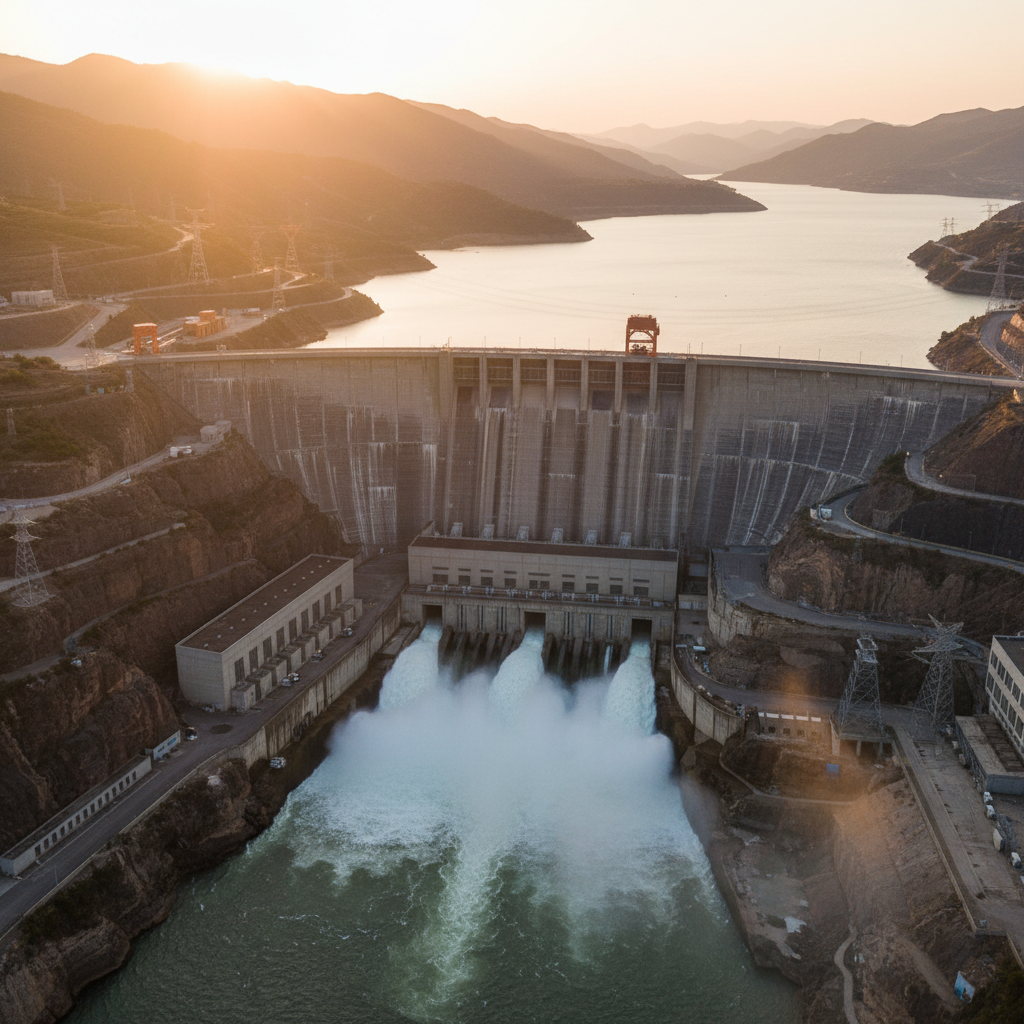
Securing robust financing is paramount for successful hydroelectric power plant development, laying the foundation for projects that deliver stable, dispatchable clean energy for decades. The scale and longevity of hydropower assets demand sophisticated financial strategies, accounting for massive upfront capital expenditures and long-term returns. Indeed, a single hydroelectric power plant development project can require over $2 billion in initial investment, highlighting the critical need for well-structured funding from inception.
Navigating the Complexities of Hydroelectric Power Plant Development Financing
Large-scale hydroelectric power plant development presents unique financial and operational challenges. Unlike intermittent renewables, hydropower offers firm, dispatchable power, but this comes with significant initial investment hurdles and extended development timelines. Understanding these complexities is the first step toward devising an effective financing roadmap.
Project Scale and Capital Expenditure
The sheer magnitude of hydroelectric power plant development projects necessitates substantial capital. Financial models often reveal severe cash deficits during the construction phase, with major capital expenditures (CAPEX) reaching into the billions of dollars. For instance, a single utility-scale project can demand a total capital expenditure of $2,275 million in the first year alone, focusing on foundational infrastructure like dam upgrades and turbine overhauls. This massive upfront outlay requires careful planning and a robust funding strategy to cover potential shortfalls and avoid insolvency.
Regulatory and Compliance Landscape
Navigating the regulatory environment is critical for any major infrastructure project, and hydroelectric power plant development is no exception. Adhering to environmental, social, and governance (ESG) standards is no longer optional but a fundamental requirement for attracting responsible capital. Furthermore, evolving national security considerations, such as “Foreign Entity of Concern” requirements, can impact project eligibility for certain incentives or the use of foreign-sourced equipment. Comprehensive environmental and social impact assessments are therefore non-negotiable, influencing project design, timelines, and ultimately, its bankability.
Key Funding Mechanisms for Hydroelectric Power Plant Development
A diverse array of funding mechanisms exists to support hydroelectric power plant development, ranging from traditional project finance to innovative blended finance models. Combining these strategies can de-risk projects, attract a wider pool of investors, and accelerate development.
Blended Finance and Public-Private Partnerships
Blended finance and public-private partnerships (PPPs) are increasingly vital for large-scale infrastructure. Frameworks like Build-Own-Operate-Transfer (BOOT) allow for effective risk sharing between public and private entities, facilitating project delivery. Governments often leverage their balance sheets to provide grants and loan programs, such as those offered by the USDA for increasing clean energy in rural America, including partially forgivable loans up to $1 billion. The Department of Energy (DOE) also provides crucial incentives like the Section 242 Hydroelectric Production Incentive Program, offering payments to qualified hydroelectric facilities for electricity generated and sold, as well as Section 243 for capital investments at existing non-powered dams or new greenfield projects. These incentives are fundamental in bridging funding gaps and attracting private capital.
Innovative Debt and Equity Structures
For long-term, stable cash flows characteristic of hydropower, project finance remains a cornerstone. This approach involves creating a special purpose vehicle (SPV) financed by non-recourse or limited-recourse debt, secured by the project’s assets and future revenues. In today’s market, innovative structures like tax equity bridge loans and credit transfer mechanisms are also emerging, similar to those used in other large-scale renewable energy projects. These provide additional sources of capital for construction costs while projects await proceeds from anticipated tax equity investments or credit sales. Lenders typically require detailed due diligence on tax equity documents and interparty agreements with tax equity investors to manage this complexity, ensuring all parties are aligned for the long-term success of the hydroelectric power plant development. For those exploring diverse large-scale renewable energy portfolios, understanding how these financing mechanisms apply to projects like solar PPA agreements for data centers can offer complementary insights.
Risk Mitigation and Long-Term Value in Hydroelectric Power Plant Development Investment
Investing in hydroelectric power plant development is a long-term commitment. Effective risk mitigation strategies are essential to protect these substantial investments and ensure predictable returns over decades.
Securing Predictable Revenue Streams
The bedrock of financing for hydroelectric power plant development is the establishment of predictable revenue streams. Long-term Power Purchase Agreements (PPAs) are instrumental in this, providing reliable payments for delivered energy, capacity, and ancillary services. These agreements significantly reduce revenue risk, making projects more attractive to lenders who prioritize stable cash flows. While some projects may pursue merchant cash flows without long-term PPAs, this typically comes with less leverage and is subject to detailed market studies, cash sweeps, and other stringent lender protections. The stability offered by PPAs underscores hydropower’s appeal as a long-duration asset.
Due Diligence and Interparty Agreements
Comprehensive due diligence is critical for investors and developers alike in hydroelectric power plant development. This process extends beyond financial modeling to encompass engineering feasibility, environmental and social impact assessments, regulatory compliance, and market studies. Investors must understand all potential risks and opportunities before committing significant capital. Robust interparty agreements with financing partners, tax equity investors, and construction contractors are also essential. These agreements delineate responsibilities, allocate risks, and establish clear pathways for conflict resolution, providing a transparent framework that protects all stakeholders and ensures the project’s long-term viability. Energende emphasizes thorough due diligence in all our projects, helping our partners navigate these intricate landscapes successfully.
Strategic Partnerships and Regional Opportunities in Hydropower Infrastructure
The global landscape for renewable energy investment is constantly evolving, with new opportunities emerging in regions seeking stable, dispatchable power. Strategic partnerships and leveraging specialized financial institutions are key to unlocking these prospects for hydroelectric power plant development.
Global and Regional Investment Landscapes
For private capital and strategic investors, hydropower projects in regions like the Caribbean offer rare long-duration renewable opportunities. Countries like Guyana, with projects such as the Amaila Falls hydropower facility, are expanding their renewable energy pipelines. This 165 MW facility, designed under a revised Build-Own-Operate-Transfer framework, aims to deliver low-carbon electricity to the national grid. Such projects are particularly compelling for funds focused on climate-aligned infrastructure with stable, long-term returns, especially when combined with expanding gas-to-energy infrastructure and emerging solar deployment. These initiatives highlight the growing demand for firm, dispatchable power that hydroelectric power plant development can reliably provide.
Leveraging Specialized Financial Institutions
Accessing diverse capital sources is crucial for large-scale hydroelectric power plant development. Specialized financial institutions, including green banks, community lenders, and impact investors, are becoming increasingly important. These entities are often better equipped to understand the long-term, community-focused aspects of hydropower projects and can provide capital that aligns with these objectives. They also play a vital role in aggregating assets and demand, connecting local lending activity to secondary markets and institutional investors. This capital recycling mechanism provides the necessary liquidity to scale successful projects and ensure ongoing investment in clean energy infrastructure. For instance, lessons learned in financing large-scale offshore wind developers navigating regulations can also inform strategies for complex hydropower initiatives.
For deeper insights on related topics, our article on Renewable Energy Data Center Trends Shaping Sustainable Infrastructure explores complementary aspects of Energende’s renewable energy approach that project developers will find valuable.
Frequently Asked Questions About hydroelectric power plant development
Q: What are the primary challenges in financing hydroelectric power plant development?
A: The main challenges include the massive upfront capital expenditures, the long project development cycles, complex regulatory hurdles, and the need for robust environmental and social impact assessments. Securing long-term, stable financing that aligns with these project timelines is crucial.
Q: How do long-term Power Purchase Agreements (PPAs) impact hydroelectric power plant development financing?
A: Long-term PPAs are fundamental for securing financing as they provide predictable and reliable revenue streams, covering payments for delivered energy, capacity, or ancillary services. Lenders view these agreements favorably, as they significantly reduce revenue risk and enhance project bankability.
Q: What role do government incentives play in hydroelectric power plant development?
A: Government incentives, such as grants, partially forgivable loans, and production tax credits (e.g., DOE Section 242/243 Hydroelectric Production Incentive Program), are vital for de-risking projects and improving their economic viability. These programs can bridge funding gaps and attract private capital to infrastructure-scale projects.
Q: Why is detailed due diligence critical for hydroelectric power plant development investors?
A: Detailed due diligence is critical to assess all aspects of a project, including engineering feasibility, environmental impact, regulatory compliance, financial projections, and stakeholder agreements. This process helps investors understand and mitigate risks, ensuring the project aligns with long-term investment goals and delivers expected returns.
Partner with Energende
Successful hydroelectric power plant development hinges on innovative and robust financing strategies that account for long-term investment horizons and complex regulatory landscapes. By understanding the diverse funding mechanisms and mitigating inherent risks, stakeholders can unlock the immense potential of hydropower to deliver firm, dispatchable clean energy. Energende stands as your expert partner, providing unparalleled insight and strategic guidance for your next large-scale hydroelectric power plant development project.
Ready to power your next clean energy project? Contact Energende today to discuss bespoke financing strategies and development expertise for your large-scale hydroelectric power plant development.