
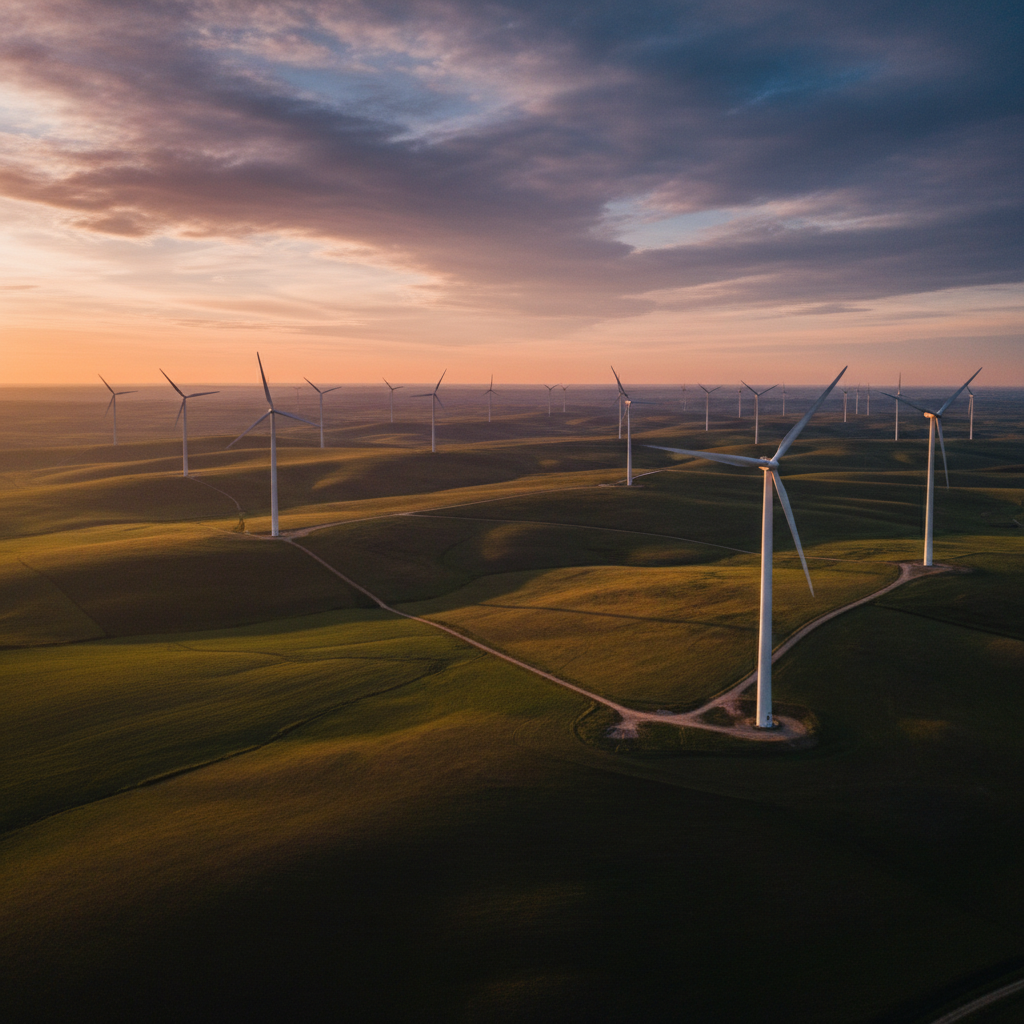
The global transition to sustainable power sources places wind energy at the forefront of infrastructure development. Institutional investors are increasingly seeking robust and innovative financing models to capitalize on the immense potential of utility-scale wind projects, especially as global emissions could peak by 2026 due to rapid renewable deployment outpacing fossil fuel demand.
This guide delves into the sophisticated financial frameworks that are propelling large-scale wind energy infrastructure worldwide. We offer insights for those looking to invest in the next generation of renewable power, focusing on the structures that drive project viability and attract significant capital.
Understanding Modern Wind Energy Project Finance
Wind energy project finance is a specialized field that underpins the development of vast renewable infrastructure. It moves beyond traditional corporate financing, focusing on the project’s future revenues as the primary source of repayment for its debt and equity.
This approach is essential for large-scale endeavors like multi-megawatt wind farms. It allows for the deployment of immense capital while strategically managing risk for all parties involved.
The Non-Recourse Nature of Project Finance
A defining characteristic of renewable energy project finance, particularly for wind energy, is its non-recourse or limited recourse nature. This means that if a project fails, lenders have limited claims on the developer’s other assets, insulating the parent company from project-specific financial risks.
This structure leverages future project revenues, rather than solely sponsor equity, making it attractive for large, capital-intensive infrastructure. It’s a critical component for fostering the confidence needed to finance multi-billion-dollar wind energy initiatives.
The Role of Special Purpose Vehicles (SPVs)
Special Purpose Vehicles (SPVs) are central to isolating financial risk and enhancing transparency for large-scale wind projects. These legally independent entities are created specifically for a single project, holding all its assets, contracts, and liabilities.
By using an SPV, financial risks associated with the wind energy project are ring-fenced, preventing them from impacting the parent company’s broader balance sheet. This structure is essential for utility-scale wind farms and other major clean energy infrastructure, providing clarity and security for institutional investors and lenders alike.
Key Financing Structures for Renewable Energy Projects
The funding landscape for renewable energy projects, including wind energy, is rich with diverse opportunities and complex structures. Mastering these modern financing approaches is critical for success in 2026 and beyond, as demand for clean electricity continues to surge.
Leading developers like Ørsted, NextEra, and EDF Renewables consistently leverage these advanced models to bring massive projects to fruition.
Blended Finance Approaches and Institutional Equity
Blended finance combines various funding sources for optimized capital stacks. This typically involves a strategic mix of tax equity, senior debt, and developer equity, often augmented by institutional equity partners for significant capital deployment. For instance, the US$67MM grid integration financing package in Brazil highlights the importance of such comprehensive approaches.
Engaging institutional equity partners is vital for securing the substantial capital required for utility-scale wind energy projects. These investors seek projects with robust financial structures and credible revenue models, ensuring long-term investment viability and alignment with ESG mandates. You can learn more about how large-scale solar projects support these strategies in our article on Utility Scale Solar Projects Supporting ESG Driven Investment Strategies.
Long-Term Power Purchase Agreements (PPAs)
Securing future revenues through long-term Power Purchase Agreements (PPAs) is a cornerstone of wind energy project financing. These agreements, typically with utilities or large corporations, guarantee a market for the electricity generated, providing predictable cash flows that lenders and investors highly value.
PPAs serve as a crucial credit enhancement, making projects more “bankable” by reducing revenue uncertainty. Additionally, utilizing government loan guarantees and production tax credits (PTCs) further enhances project viability, significantly improving internal rates of return and attracting capital to the wind energy sector.
Navigating Investment Opportunities in Wind Energy
The investment landscape for wind energy is dynamic, marked by both immense opportunity and significant challenges. Institutional investors are keen to deploy capital into projects that demonstrate both financial robustness and operational resilience.
For Energende, understanding these nuances is key to developing sustainable infrastructure. This includes navigating complex market dynamics and regulatory frameworks effectively.
Attracting Global Capital to Wind Projects
Bankable wind energy investments depend on disciplined capital stack structuring and clear risk allocation. While capital availability continues to grow, only projects with robust financial structures and credible revenue models are able to secure long-term investment and reach financial close. This discipline is paramount for attracting global capital.
The critical importance of grid upgrades, long-duration storage, and supply-chain innovation cannot be overstated. These elements strengthen investor confidence by ensuring the generated electricity can be reliably delivered to market and stored when needed. Without these foundational improvements, even well-financed wind energy projects face significant hurdles.
Addressing Grid, Permitting, and Tax Credit Challenges in Wind Energy
Overcoming permitting complexities and grid bottlenecks is a persistent challenge in top power markets such as PJM, MISO, ERCOT, and CAISO. These issues are frequently cited as hindrances to investing in and developing renewable projects. Significant investment in transmission infrastructure is required to fully integrate new wind energy capacity.
Moreover, developers must meet specific deadlines for physical work on wind projects to qualify for crucial tax credits. Under Treasury Notice 2025‑42, utility-scale wind projects must begin physical work by July 4, 2026, to qualify. This urgency makes early planning and meticulous documentation even more critical for securing tax credit financing and maximizing project returns. The U.S. Energy Information Administration (EIA) provides detailed insights into these market dynamics.
The Future of Large-Scale Renewable Infrastructure Investment
The trajectory of renewable energy investment indicates a transformative period ahead for large-scale infrastructure. By 2026, energy-related global emissions could peak as renewable deployment dramatically outpaces new fossil fuel demand.
This shift underscores the irreversible economic momentum behind clean energy, with wind and solar now cost-competitive without subsidies across much of the world. This tipping point signals a robust future for sustainable infrastructure.
Emerging Trends in Clean Energy Investment
In 2026, renewable energy investment is increasingly flowing towards three critical areas: grid infrastructure, long-duration storage, and AI-driven energy management. For investors, corporates, and startups, these areas represent significant opportunities, despite ongoing constraints like power availability and regulatory complexity.
Battery storage capacity, for example, is forecasted to reach 123 GW globally by 2026, reflecting its expanding role in stabilizing renewable power systems and supporting the broader energy transition. This growth is essential for integrating the variable output of wind and solar farms. Learn more about securing investment in Hydroelectric Project Financing Strategies for Long Term Investment Success.
Energende’s Commitment to Scaling Sustainable Infrastructure
Energende provides unparalleled expertise in developing robust financial structures for complex renewable projects in growing markets. Our deep understanding of project finance models, from SPVs to tailored blended finance solutions, positions us as a trusted partner for institutional investors.
We are dedicated to facilitating the deployment of capital into large-scale wind energy and other clean energy infrastructure. Our focus is on creating projects that are not only financially viable but also contribute significantly to global decarbonization efforts. Our partnerships ensure project success from conception to operational efficiency. For more on the global shift, consult resources from organizations like the International Renewable Energy Agency (IRENA).
For deeper insights on related topics, our article on Power Purchase Agreement Developers Creating Stable Energy Revenue Streams explores complementary aspects of Energende’s renewable energy approach that project developers will find valuable.
Frequently Asked Questions About wind energy
Q: What is wind energy project finance?
A: Wind energy project finance refers to financial frameworks that fund large-scale wind infrastructure by leveraging future revenues, rather than relying solely on sponsor equity. This typically involves non-recourse or limited recourse structures, protecting developers’ other assets.
Q: What are the common financing models for large-scale wind energy projects?
A: Common models include blended finance (combining tax equity, debt, and developer equity), institutional equity partnerships, and long-term Power Purchase Agreements (PPAs) with utilities or corporations. Government loan guarantees and production tax credits also play a significant role.
Q: How do institutional investors mitigate risk in wind energy projects?
A: Institutional investors mitigate risk through disciplined capital stack structuring, clear risk allocation, and the use of Special Purpose Vehicles (SPVs). Long-term PPAs provide revenue certainty, while robust due diligence on grid integration and regulatory compliance is crucial.
Q: What are the biggest challenges facing wind energy infrastructure investment in 2026?
A: Key challenges include grid bottlenecks, permitting complexities, supply chain issues, and the need for significant investments in long-duration energy storage. Regulatory changes and ensuring eligibility for tax credits also require careful navigation for wind energy projects.
Partner with Energende
The landscape for wind energy project financing is evolving rapidly, driven by global demand and innovative financial instruments. By understanding and leveraging these sophisticated models, institutional investors can confidently power the expansion of critical wind energy infrastructure, contributing significantly to a sustainable future.
Ready to explore financing solutions for your next large-scale wind energy project? Contact Energende today for expert consultation and partnership opportunities. Our team is equipped to guide you through complex financial structures and market demands.