
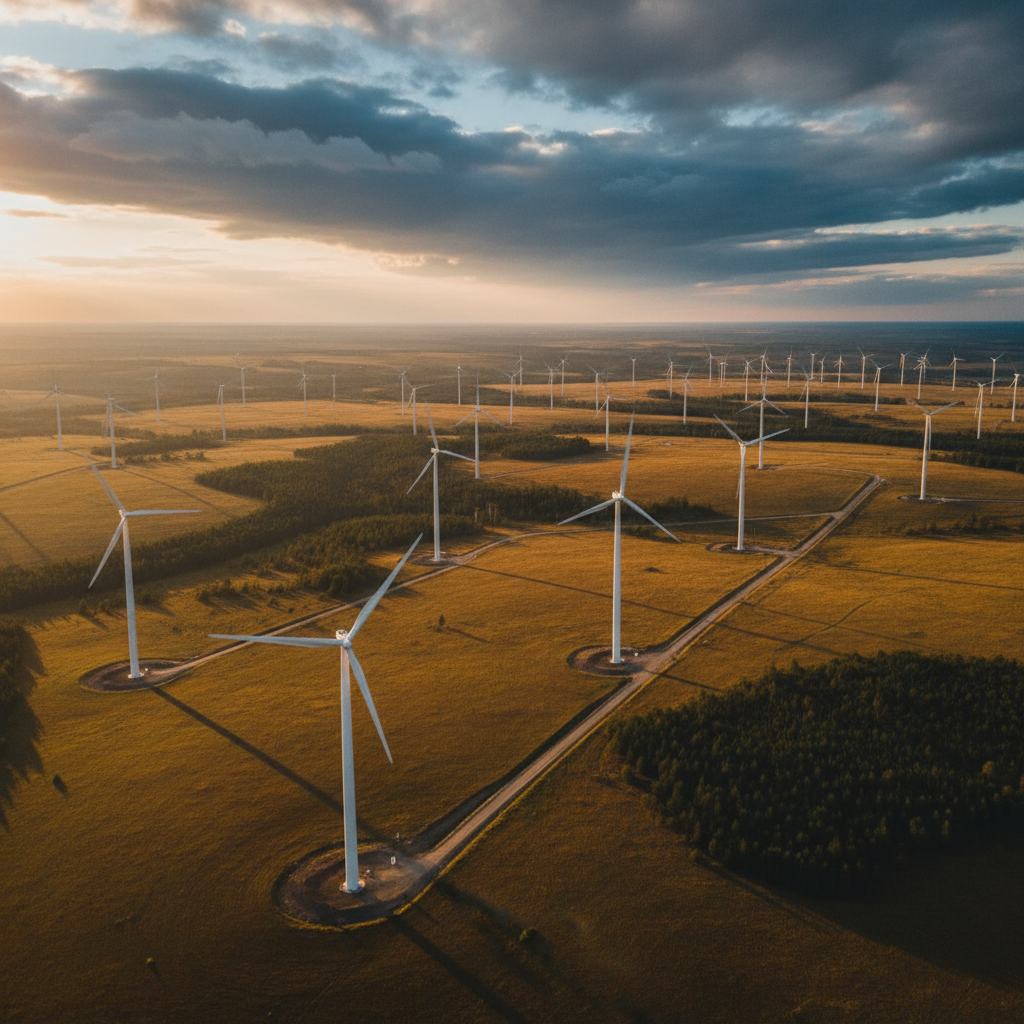
The global drive towards sustainable power generation has placed wind energy, particularly offshore developments, at the forefront of large-scale infrastructure projects. As demand for clean power surges, offshore wind developers are increasingly focused on navigating complex regulatory landscapes while simultaneously pursuing ambitious global expansion. The U.S. alone has 17 offshore wind projects with an estimated value of $55 billion set to begin within the next five years, signaling a transformative era for the energy sector. This momentum underscores the critical need for strategic development, robust investment, and advanced technological integration.
Transforming Grids with Large-Scale Offshore Wind Energy Projects
The vision of a grid powered by clean, abundant energy is rapidly becoming a reality, largely due to the monumental scale of offshore wind energy projects. These developments are foundational shifts, capable of powering entire regions with sustainable electricity. Their immense capacity helps stabilize grids, reducing reliance on fossil fuels for energy security.
US Project Spotlights: Pioneering Offshore Wind
- Coastal Virginia Offshore Wind (CVOW) represents the largest U.S. project at 2.6 GW, powering 660,000 homes. This $10.7 billion development by Dominion Energy and Stonepeak Infrastructure is a testament to the scale and investment now flowing into the sector, with construction supporting 900 jobs annually.
- Revolution Wind, the first multi-state offshore wind project, will deliver 704 MW across Connecticut (304 MW) and Rhode Island (400 MW). Operated by Ørsted and Skyborn Renewables, this $700 million project features 65 turbines and is set to power 350,000 homes.
- Empire Wind I, an 810 MW offshore wind farm by Equinor, will serve New York City directly. Located 24 km off Long Island, its 54 turbines (15 MW each) are poised to power 500,000 homes.
- Vineyard Wind I, off the Massachusetts coast, is the first U.S. commercial-scale project, delivering 800 MW of clean energy for 400,000 homes and businesses. This $3.5 billion joint venture features 62 turbines (13 MW each) and is scheduled for operations by December 2026.
These projects showcase the rapid acceleration of offshore wind deployment across the United States, demonstrating a clear pathway for integrating gigawatt-scale clean energy into the national grid and fostering economic growth.
European & Global Initiatives: Setting the Pace for Offshore Wind Energy
Globally, the impetus for offshore wind energy is even more pronounced. European nations, long at the forefront of renewable energy adoption, continue to set ambitious targets. The Netherlands, for example, has outlined a clear roadmap targeting approximately 21 GW of offshore wind energy by 2032. This strategic planning ensures continuous development and integration of these massive power sources, as detailed in the Development Framework for Offshore Wind Energy.
Beyond Europe and North America, emerging markets in Asia are also rapidly expanding their utility-scale wind energy projects. This global push highlights a collective commitment to leveraging the vast potential of offshore wind for a sustainable energy future. Energende understands these global shifts, positioning itself to support large-scale infrastructure projects worldwide.
Navigating the Regulatory Landscape for Offshore Wind Energy Development
The path to establishing large-scale offshore wind farms is fraught with regulatory complexities. Developers face a labyrinth of permitting requirements and environmental assessments that significantly impact project timelines. Successfully navigating these hurdles is paramount for securing project viability in the evolving wind energy sector.
Complex Permitting and Environmental Compliance
- Offshore wind developers face intricate federal and state permitting processes, often leading to project delays. These include approvals from agencies like the Bureau of Ocean Energy Management (BOEM) and various state environmental departments.
- Environmental impact assessments are exhaustive, covering marine life, fishing industries, and potential navigational impacts. Ensuring compliance requires meticulous planning and often innovative mitigation strategies.
- Legal challenges and court decisions have significantly impacted project timelines and investor confidence. For instance, temporary injunctions and lawsuits against executive memoranda have historically paused or slowed development. Developers must be prepared for potential legal scrutiny throughout the project lifecycle.
Such challenges necessitate a robust understanding of legal frameworks and proactive stakeholder engagement. Energende assists clients in this complex environment, providing expertise in large-scale renewable energy infrastructure project development.
Policy Frameworks and Government Support for Wind Energy
Despite the challenges, policy frameworks and government support are critical enablers for offshore wind energy development. Clear guidelines and supportive legislation provide stability for long-term investments.
- Development frameworks provide crucial clarity on the schedule and preconditions for offshore grid development. The Netherlands’ comprehensive framework, for example, details the design, construction, and lifespan of its offshore grid, offering predictability to developers.
- State initiatives, like those from the New York State Energy Research and Development Authority (NYSERDA), are focused on streamlining development processes and improving port infrastructure. Such efforts are vital for addressing logistical bottlenecks and accelerating project deployment.
- Government incentives, such as tax credits and power purchase agreements, underpin the economic viability of many offshore wind projects. These mechanisms attract capital and reduce financial risks, encouraging sustained growth in the sector.
Strategic government backing not only de-risks projects but also fosters an ecosystem conducive to innovation and expansion within the offshore wind industry.
Investment, Infrastructure, and the Future of Wind Energy
The ambitious scale of offshore wind energy projects demands substantial capital investment and robust infrastructure development. Securing financing and building necessary supply chains are becoming increasingly complex. A delicate balance must be struck between attracting global capital and mitigating rising project costs to ensure continued growth.
Securing Capital and Bolstering Investor Confidence
- The offshore wind sector faces a ‘reality check’ due to intensifying competition for global capital and rising costs. Developers must present compelling business cases and demonstrate strong project execution capabilities.
- Addressing grid access and transmission costs remains a critical challenge for project viability. High upfront investment in grid upgrades and connections can significantly impact project economics.
- Investor confidence is directly tied to regulatory stability and predictable policy environments. Fluctuations in support mechanisms or unexpected legal hurdles can deter potential investors, highlighting the need for consistent governmental backing.
Energende works closely with financial partners and stakeholders to optimize project structures, ensuring attractive returns and long-term viability for large-scale wind energy developments.
Developing Robust Port Infrastructure and Supply Chains for Offshore Wind
The sheer size of modern offshore wind turbines and components necessitates specialized port infrastructure and efficient supply chains. Without these foundational elements, rapid deployment and maintenance become logistically impossible.
- Significant investments in port infrastructure, such as California’s Pier Wind ($20 million from the California Energy Commission), are essential for large-scale deployment. These ports need to handle massive components, from turbine blades to foundations.
- Building a resilient domestic supply chain is crucial for reducing costs, mitigating risks, and creating local economic opportunities. This includes manufacturing facilities, specialized vessels, and skilled labor.
- Offshore wind projects create substantial economic benefits through job creation, with thousands of direct and indirect jobs per project. For instance, the Coastal Virginia Offshore Wind project will support 900 jobs annually during construction and 1,100 during operations.
Developing these integrated ecosystems of infrastructure and talent is vital for the sustained growth and scalability of the wind energy sector globally. These efforts ensure that large-scale renewable energy infrastructure projects are not only technically feasible but also economically beneficial for local communities.
Advancements in Offshore Wind Technology and Project Reliability
Innovation is at the heart of the offshore wind industry, continuously pushing the boundaries of turbine efficiency, reliability, and grid integration. These advancements are key to maximizing energy output, reducing operational costs, and ensuring offshore wind farms deliver consistent, dependable power.
Evolution of Turbine Technology and Capacity
- Modern offshore wind farms utilize increasingly powerful turbines, with capacities reaching 13 MW to 15 MW per unit. This significant increase in individual turbine capacity allows for fewer turbines to achieve the same output, reducing overall project footprint and installation costs.
- Research and development continue to focus on even larger turbines, advanced blade designs, and more durable materials capable of withstanding harsh marine environments. These innovations enhance performance and extend the operational lifespan of offshore assets.
Such technological leaps are fundamental to improving the cost-effectiveness and scalability of offshore wind energy, making it a more competitive source of clean power.
Optimizing Grid Integration and Performance for Wind Energy Assets
Beyond turbine technology, the efficiency of offshore wind farms hinges on their seamless integration into national grids. This requires sophisticated planning and innovative solutions for power transmission and distribution.
- Projects like South Fork Wind demonstrate impressive capacity factors (e.g., 51.6% during cold snaps) and near-perfect availability (generating electricity 99% of days and 90% of hours). This reliability underscores the critical role of offshore wind in providing stable baseload power, even during peak demand.
- Strategic placement of connection points near industrial clusters minimizes onshore high-voltage network investments. This approach, exemplified by planning in the Netherlands, optimizes infrastructure and reduces project costs.
- Continuous innovation in offshore grid design ensures long-term availability and efficiency for large-scale energy delivery. Advanced monitoring systems, predictive maintenance, and smart grid technologies are crucial for maximizing uptime and optimizing power flow.
These efforts collectively enhance the reliability and efficiency of offshore wind energy, solidifying its position as a cornerstone of future sustainable energy systems. Energende leverages cutting-edge technology and engineering expertise to deliver highly reliable and efficient renewable energy infrastructure.
For deeper insights on related topics, our article on Solar PPA Agreements for Data Centers and Enterprise Energy Buyers explores complementary aspects of Energende’s renewable energy approach that project developers will find valuable.
Furthermore, understanding the global context of renewable energy infrastructure is crucial. Explore how Utility Scale Wind Energy Projects are Expanding Across Asian Markets, and learn about the role of Renewable Energy EPC Contractors in Delivering Large Infrastructure Projects to fully grasp the scope of our expertise.
Frequently Asked Questions About wind energy
Q: What is the current status of major offshore wind energy projects in the U.S.?
A: Several significant offshore wind energy projects are underway or commencing soon in the U.S., including Vineyard Wind I, Revolution Wind, Empire Wind I, and Coastal Virginia Offshore Wind. These projects aim to deliver gigawatts of clean power, collectively powering millions of homes and creating thousands of jobs. Many are slated for operation around 2026.
Q: What are the primary regulatory challenges faced by offshore wind energy developers?
A: Offshore wind energy developers encounter complex permitting processes at federal and state levels, environmental impact assessments, and grid connection approvals. Navigating these requires detailed planning, stakeholder engagement, and adaptability to evolving legal and policy frameworks to ensure project continuity and success.
Q: How is investment impacting the growth of the global wind energy sector?
A: Investment is a critical driver for the global wind energy sector, with significant capital flowing into new projects. However, developers face increasing competition for funds, pressure on grid access, and rising transmission costs, necessitating strong investor confidence and supportive policy environments to sustain growth and expansion.
Q: What advancements are improving the reliability and efficiency of offshore wind energy?
A: Advancements in turbine technology, such as larger capacities (e.g., 15 MW turbines), are significantly improving offshore wind energy efficiency. Coupled with sophisticated grid integration strategies and high operational capacity factors, these innovations ensure reliable and consistent power generation, even during peak demand periods like winter storms.
Partner with Energende
Ready to explore the potential of large-scale renewable energy infrastructure for your next project? Energende specializes in delivering comprehensive solutions for wind energy, solar farms, hydroelectric plants, and solar-powered data centers. Contact Energende today for expert consultation and partnership in building the clean energy infrastructure of tomorrow.